Shmuel Atzmon-Wircer
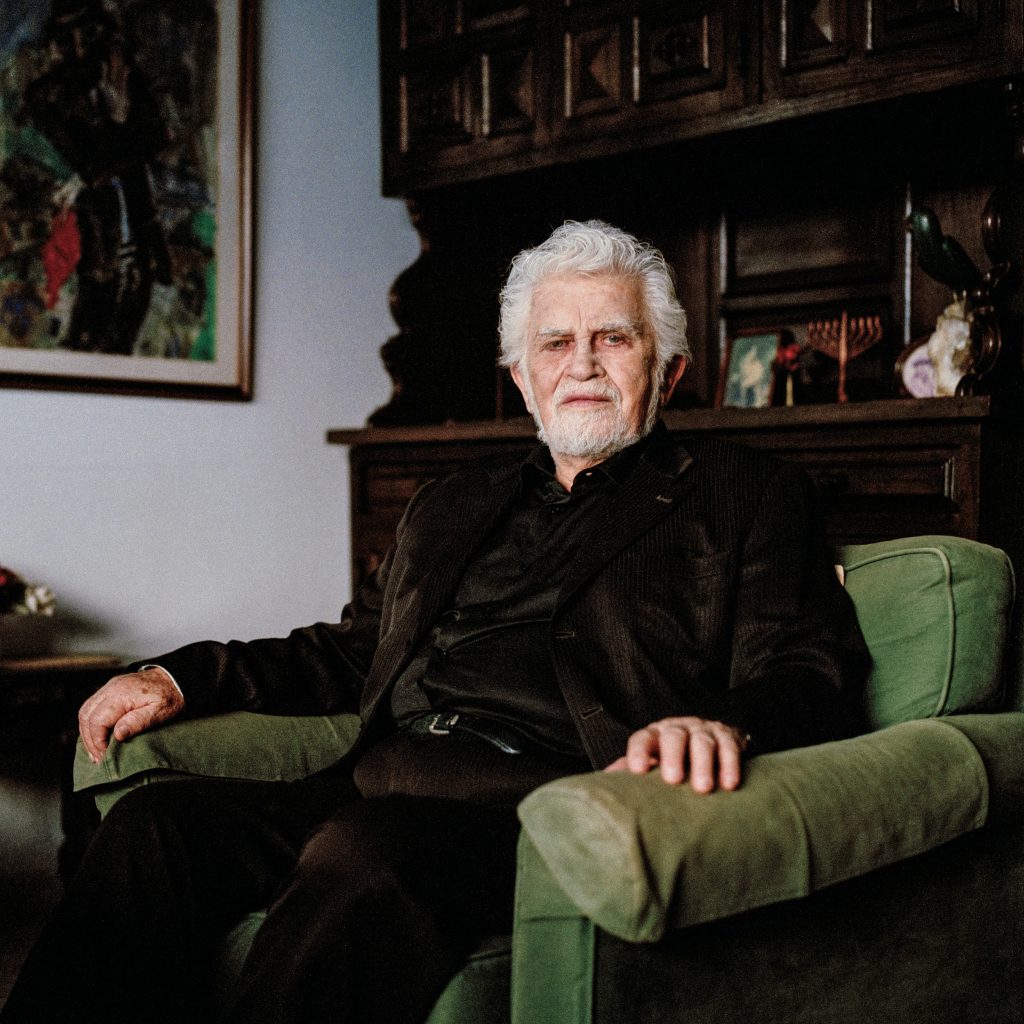
Shmuel Atzmon-Wircer (b.1929). Tel Aviv, Israel. 7 December 2017.
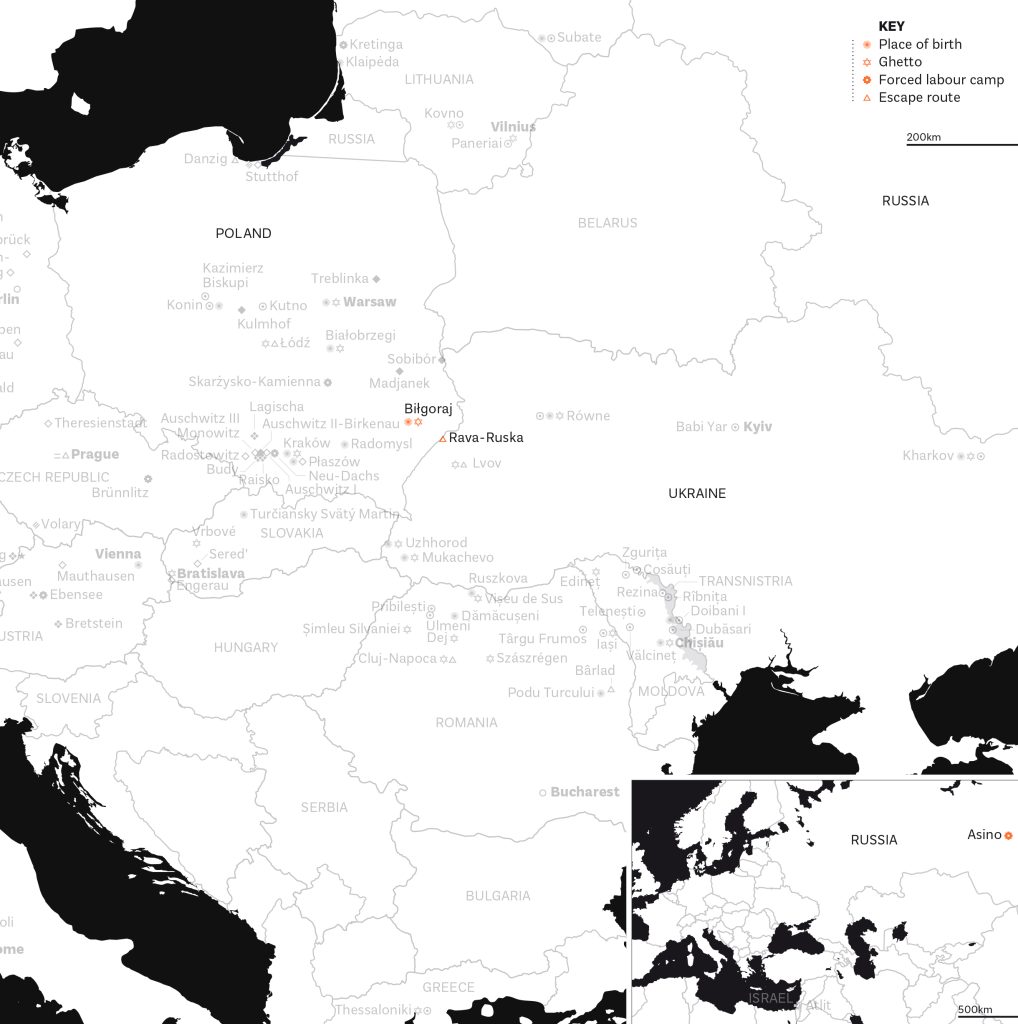
I had two childhoods. One before 1939 and one after. I was born in Biłgoraj, a town in which you will still find echoes of how life was.
It was burned down completely. It took me 45 years to mentally decide to go back there, which is still, in my mind, due to my children. I wanted to show them my roots.
I will never forget my son’s question. There is still a small street with old buildings and he asks me, “Father, were you born here? You came from here?” I said, “Yes, those are my roots”. “And from here you got to where you are today?” I said, “The problem is not where you are born, [it] is what you are born with.”
I was born in a traditional home, immersed in Yiddish culture. It is a 1000-year-old language and culture but, for me, Yiddish is not only a culture but a civilisation. It does not just belong to one country, it has spread out. I think of this as a ‘soul language’ for those who use it and those who love it. Biłgoraj reminds me of my youth and understanding what it gave me in those ten years before the war. When the war started I was aged nine and a half.
In Hebrew there is a saying, “Those who were saved from the Holocaust”. I don’t agree with this, I fight against this. I am a survivor.
That is a big difference. When I came to this country, I felt that they didn’t want to accept me as a survivor, because they wanted to say that they saved me. We survived. It’s true there were some who saved [others], the ‘just’.
I think of myself as a witness of the Holocaust. I felt I had the responsibility to tell of the destruction of six million people but also about the tragedy of Yiddish and Yiddish culture.
The ultimate memory of the Holocaust can pass away if you only talk about the destruction of buildings or objects or people. This can be forgotten and ripped out. The culture held in it the essence, the memory. Yiddish is the single absolute ultimate memory of the Holocaust. Because when you say ‘Yiddish’, immediately you have in your mind ‘the Holocaust’. Objects on the earth that can be built can also be destroyed. In Germany, in 1728, they burned Jewish books and I was told that people who can burn holy scriptures can also burn people. So, what I am trying to say is that what I feel, this is needed for the future, not just the memory of the Holocaust, but of culture.
This is what I was trying to do when I established the Yiddishspiel Theatre.
I came to this country speaking Hebrew perfectly because in Biłgoraj my father sent me to Hebrew school. I was the only son in the whole family and my father wanted me to learn Hebrew. Until I was nine years old I spoke only it and during the war he taught me Hebrew. After about eight months under the Germans, my father found a way to escape to the Russians but they didn’t want us and sent us to Siberia – we were seen as enemies of the people. There at night, without electricity, for about three years, he taught me Yiddish and Hebrew. He was not a teacher but he was an intelligent person.
One day, when I was about 12, I said to my father that I was stopping learning Hebrew but he told me I had to continue because from here we can go to Palestine at the end of the war. He also said I must continue to learn Yiddish in order to remain a Jew. My identity, my person, is a Jew first, then an Israeli. This is different to many people around the world, for instance my son will say first he is Israeli. My brother was born here, he says. “I am an Israeli.” I always say I am Yiddish, I am a Jew – that is my identity.
In the last 25 or 30 years, I have been absolutely devoted to bringing Yiddish theatre back in Israel, along with two other people. People thought we were crazy but, for the things I believe in, I am ready to fight and to face the consequences. Thank God we succeeded. From 1980 to 1996 we played about 1000 performances all over the world, and I discovered the thirst for this culture. Everywhere we went people said. “Thank you, you have brought us something that we were missing.”
History has many faces, but the irony of history is that the Yiddishspiel Theatre came from Germany, not from Israel, not even from the Jews. Because we had given up, [were] destroyed, people did not believe we could come back, especially in Israel.
We were invited to Germany, to a festival, in 1986. After we played, there was a gala reception and I had to talk. I said that, being a survivor of the Holocaust, I have the right to talk in Yiddish and not German; that when I was playing and you were laughing and clapping your hands, my heart bled, not being able to forget that from this place where we are standing came the order to kill one and a half million children, and also the killing of a 1000-year-old culture. I am telling you, as the jester in a Shakespearean tragedy, you have to know the truth. It wasn’t in 1933 that the order was given to destroy the Jews, but in 1728. I beseech you, let’s do something to hold onto the wonderful culture, books, and language.
Seated next to me was the Minister of Culture. I said to her that I would like to create a theatre and, you may ask, why we would need to keep a dead language? Let me tell you what I heard from [Polish-American writer Isaac Bashevis] Singer: this is not a dead language, it’s a language of the dead. Jews. And this language must held onto. And so the minister told me she’d like to meet to talk about it. I told her I would need a car because I had promised myself that, 45 years after the Holocaust, I would not walk in the streets in Germany. All I can do is go from the airport to the hotel, the theatre and back to the airport. She said she was impressed, that it was a wonderful idea and she was ready to give me the first 100,000 Marks to start a theatre and build around it.
I wanted to show that history has many faces. Someone once told me that the life of a man is like a river, it never goes in the same place. I knew how to swim in the river of life. This theatre created a revolution in the minds of the Israelis and the world.
My roots are deep in the tradition of a 1000-year -old culture. In 1967 I began to study Yiddish culture and language at university because I missed a lot during the war.
I would say that those who survived, most of them, turned out positively in life. I once said in Yad Vashem that the real heroes are the ones who, after going through [the Holocaust] as children, still became positive people, a mensch as we call them in Yiddish. These are the biggest heroes in life that I know.
My change to Yiddish came in 1967 when I realised that I was cheating myself by not wanting to be this which I am, by trying to pretend to be somebody else. This is very important for me in my life.
L’chaim.