
Ester Hershberg
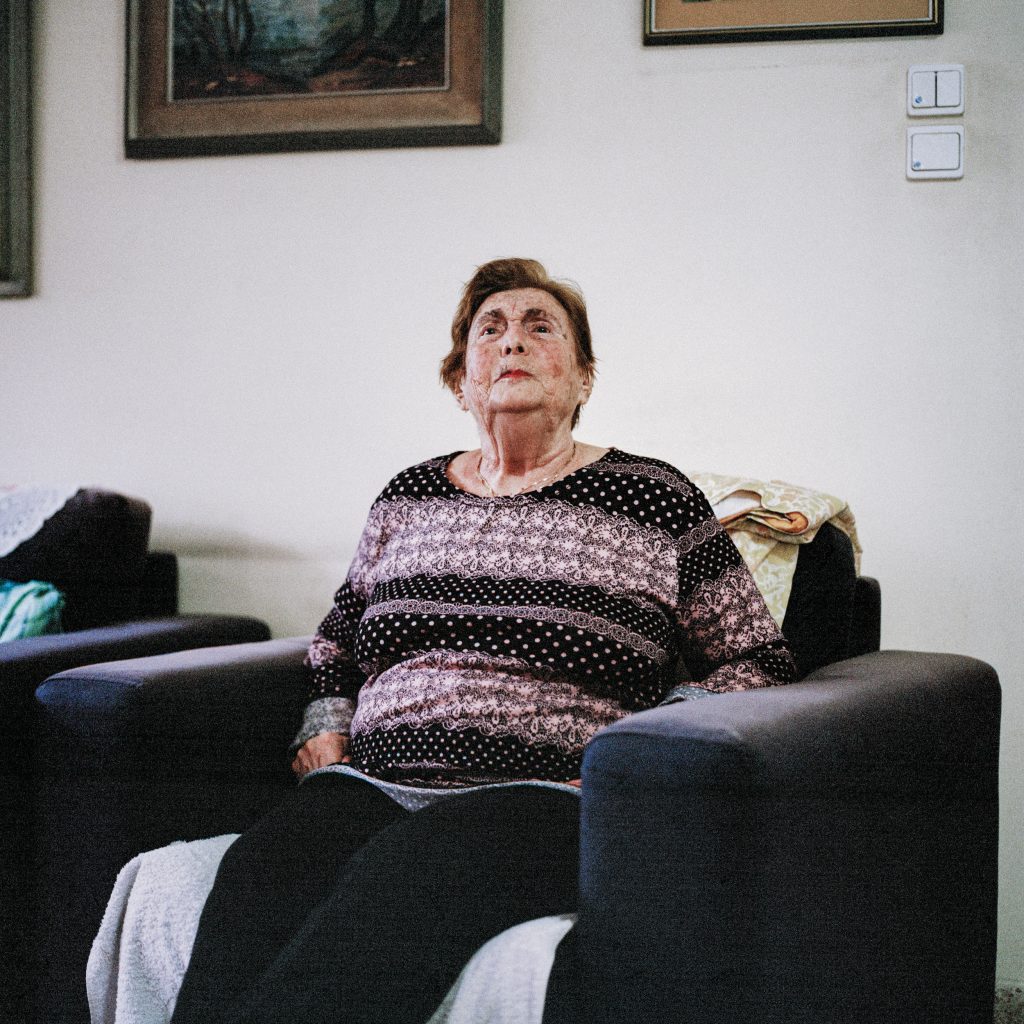
Ester Hershberg (b.1920). Tel Aviv, Israel. 5 December 2017.
Ester: I am alive because I was at Auschwitz and because I worked for [Oskar] Schindler.
I have forgotten much of what I learned many many years ago. I am very, very old. I am 97. And today [Ester laughs], I am 98!
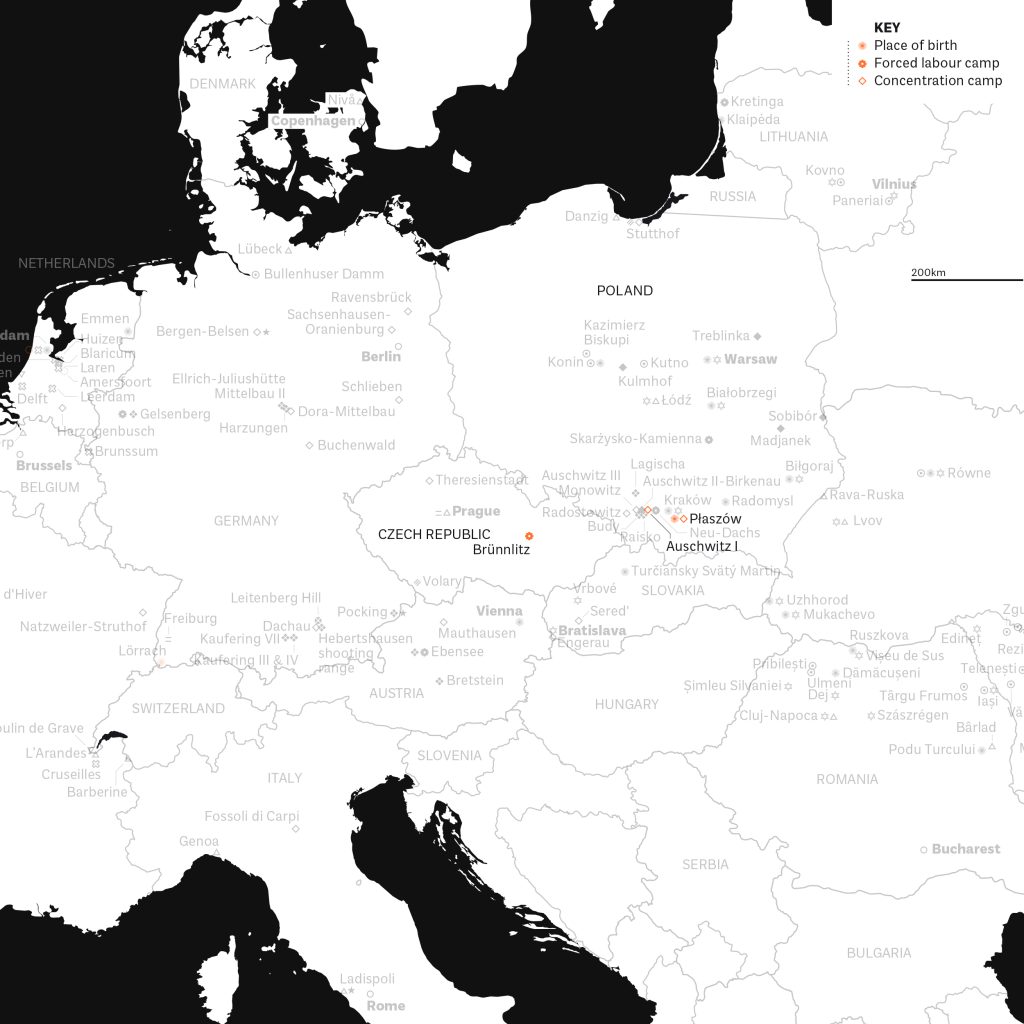
I was at Auschwitz and worked with Schindler. I helped many, many men to live. I put the names of their families onto Schindler’s list so they could work in the factory, making armaments for the Germans.
Ita: She was taken to Płaszów on Schindler’s list to work in a factory. She had a twin sister, who is no longer alive.
Ester: She’s gone. I was in Haifa when she died.
Ita: The Germans killed her mother. She also had a sister and a younger brother. They were from a very religious family.
Ester: I was born in Kraków. My grandfather was very, very rich and owned the Fortuna flour factory near Kraków in Słomniki. And he owned another factory that produced beer. One of my mother’s brothers worked in the beer factory and another worked in the flour factory where my father worked.
My father and my brother worked in Austria for the Germans and after the Americans came, they were sent to Italy to recover.
[Ester speaks in Polish] Ita: My mother says, “I put the names of lots of people on the list and that is why they survived.”
— Told by Ester with contributions from her daughter Ita.