

Anna Rabkin and Arthur Rose
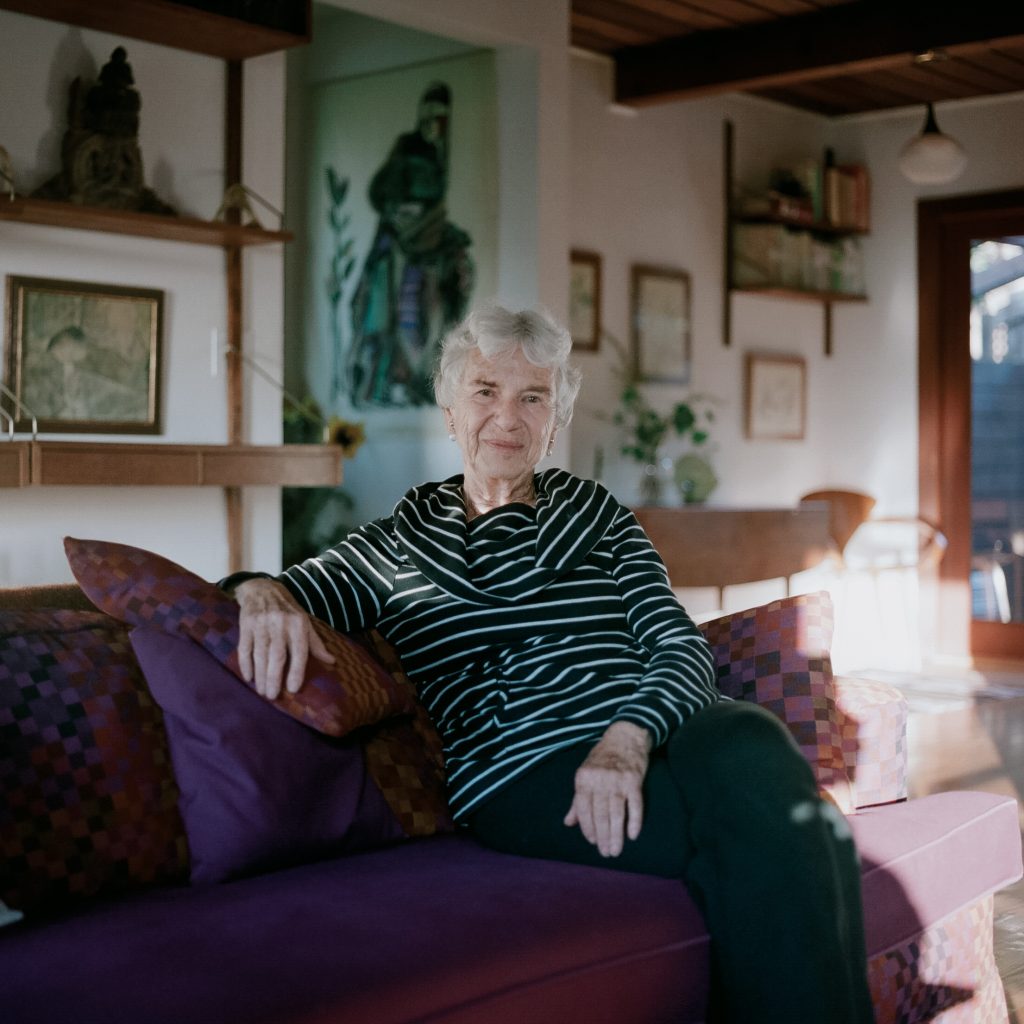
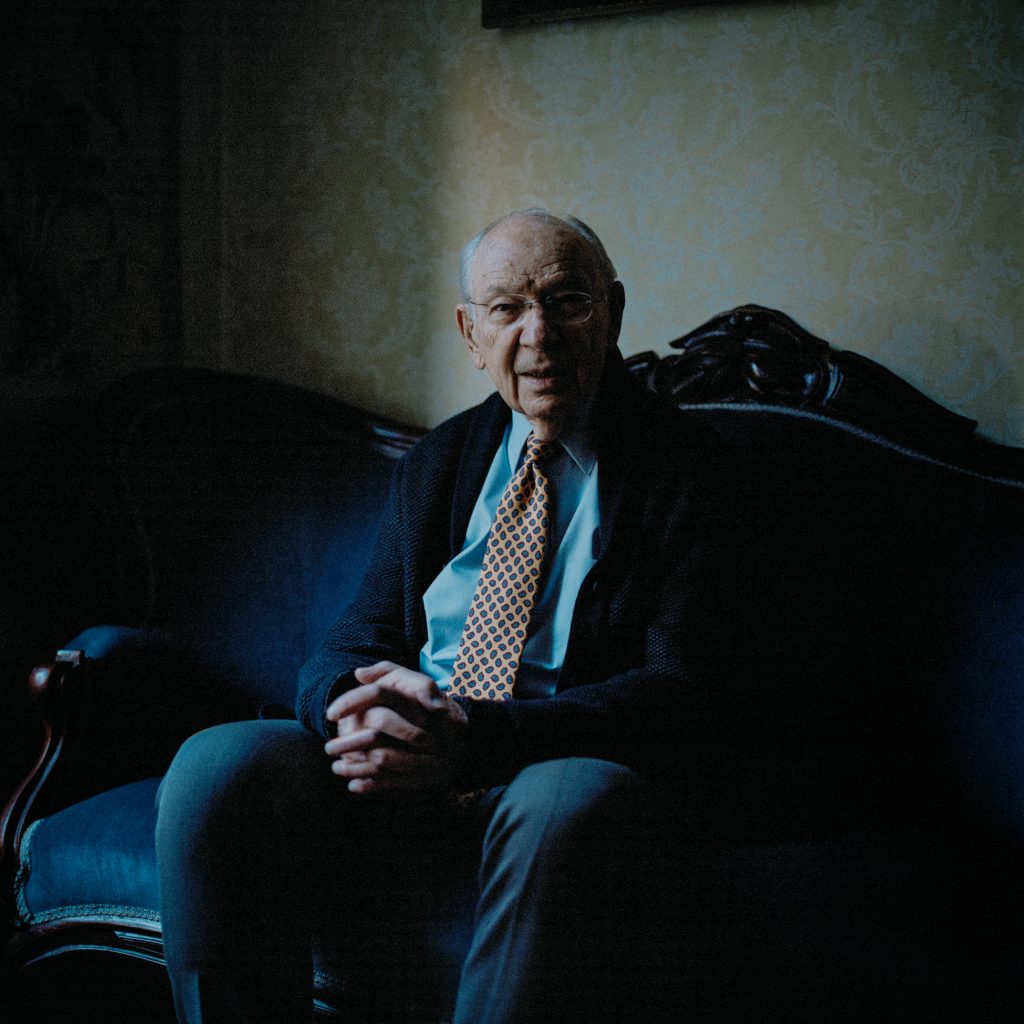
Anna Rabkin (b.1935). San Francisco, United States. 2 November 2017.
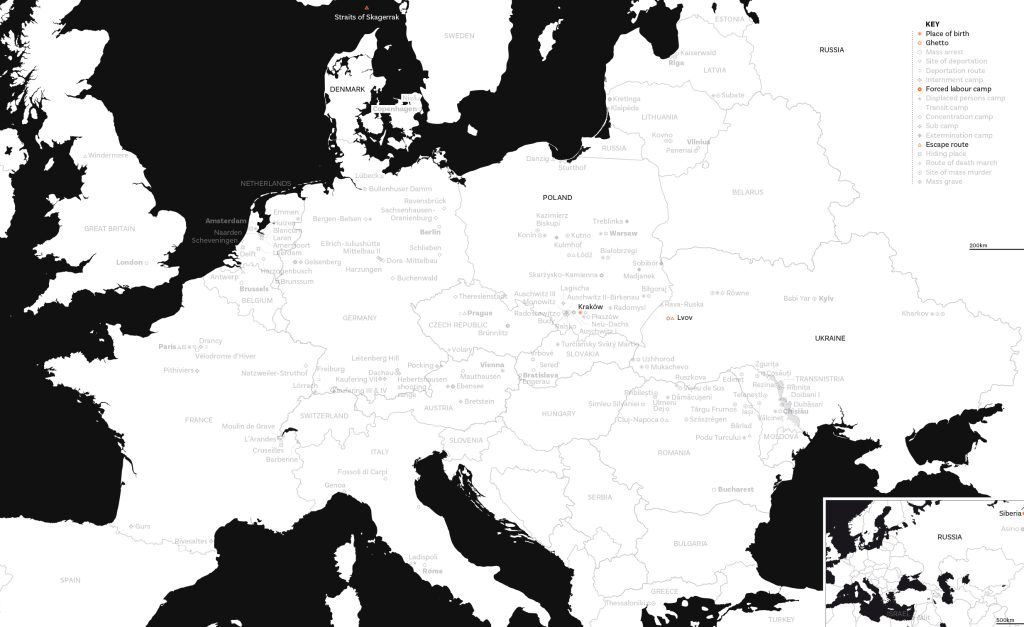
My memoir, From Kraków to Berkeley: Coming Out of Hiding, begins on 1 September, 1939: the day we escaped from Kraków and moved to Lwów [Lviv]. My grandmother was from there and my father, who was an attorney, had a number of connections in the city.
When we arrived, the four of us – my brother, mother, father and I – suddenly found ourselves living in one room, and sharing everything with several other people in the apartment. As a small child, I couldn’t understand why, all of a sudden, everything was so different.
We couldn’t get enough food, people were irritable and I was disciplined for the slightest infraction, whereas previously I’d been a pampered little girl. It was very confusing for a small child to be uprooted like that. We lived under the Russians for about two years. I had a half-sister who was quite a bit older than my brother and I. She was from my mother’s first marriage and living with my grandmother who was widowed; they had also both come to Lviv.
A couple of months after the Russians arrived in Lviv, they asked that people choose to stay in Lviv or go back west. My father smelled a rat and begged my grandmother, a staunch anti-communist, to stay. But she chose to go back because she didn’t think the Germans could be barbarians like the Russians were.
We said goodbye to my grandmother and my [step] sister; they were put on a train in the belief they were going to go back west. But they ended up in Siberia, in a labour camp where my step sister died of typhoid. My grandmother, who was already an old woman by then, somehow managed to survive. My grandmother, my mother’s sister and her husband, who was a doctor in the Polish Army, tried to escape from the Russians through Lithuania. The Russians picked them up during the attempt. My aunt was sent to one of the gulags in Kazakhstan and my uncle was sent to Murmansk, near the Arctic Circle, to take care of Russian soldiers.
I was about five when I heard that my sister died and then about a year later, I heard my aunt had died too. I didn’t really understand it. There was so much talk about death at that time, with people dying from natural and unnatural causes.
In 1941, Lviv was taken by the Russians, then by the Nazis. A few days later German soldiers came to our street. This time they didn’t knock, they just barged in and started to take stuff – whatever they wanted. And they went from one Jewish house to another. This was the start of the plundering, the looting. About two or three months later, I think it was in December 1941, we all had to move into the ghetto.
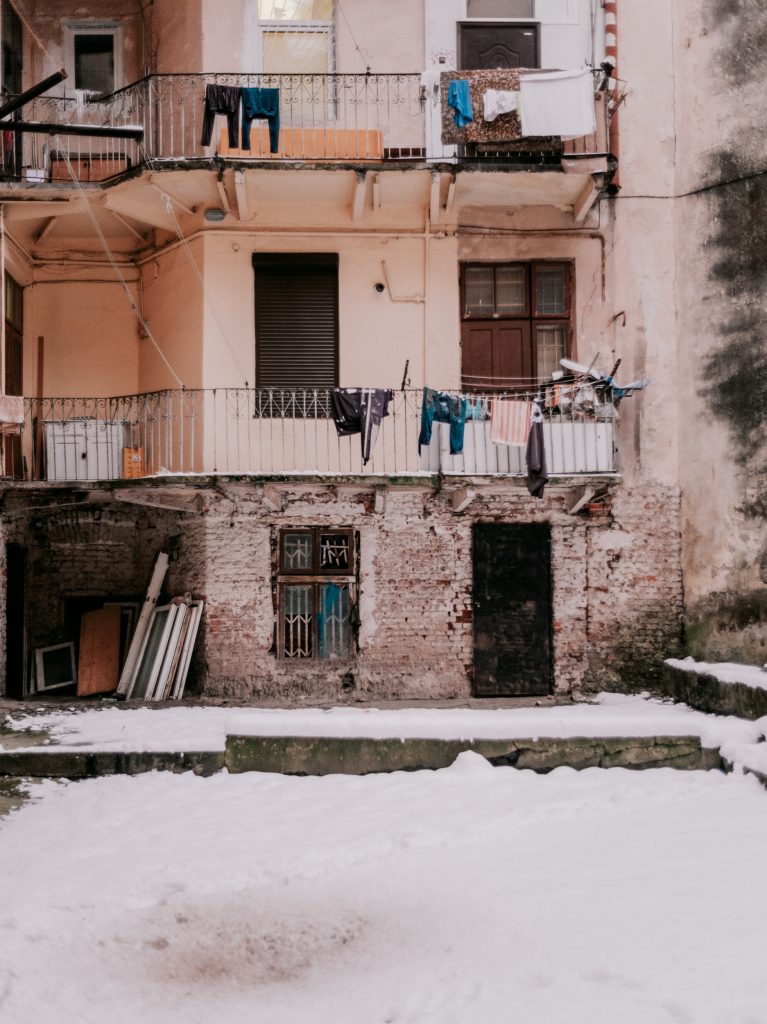
I had never seen a slum in my life. I thought it was so ugly and disgusting. It was dirty and overcrowded and there were rodents and all sorts of vermin. We rented a room and the kitchen in that apartment had another family living in it. The building had several floors, one of those outside balconies, and a courtyard in the middle. There was one toilet which I was not allowed to go into because it was so filthy and one tap so the water came from one place.
Hygiene was a real problem: I got lice and had to have my head shaved. Everybody was terrified of typhoid. There was a lot of disease and no medication to speak of. Under the Russians, it was difficult to get food but there was a black market and people managed. It wasn’t good food, but we didn’t starve. Once the Germans came, we were hungry every day.
You lived with it every day. You went to sleep hungry, you woke up hungry. One day my brother and I had gone to the little hill nearby and there was a field where you could go and pick nettles and sorrel. Those were delicacies – nettles were a little like spinach and sorrel improved the soup made from potato peelings or rotten potatoes. Practically every other day there would be trucks of SS and Gestapo coming. They had these dogs and they would put people into their trucks.
I was told never to show myself when the Gestapo was there. Nobody needed to tell me because I was so terrified of those dogs and those dreadful men. They were like ogres from fairytales and I was going to take very good care to keep out of their way.
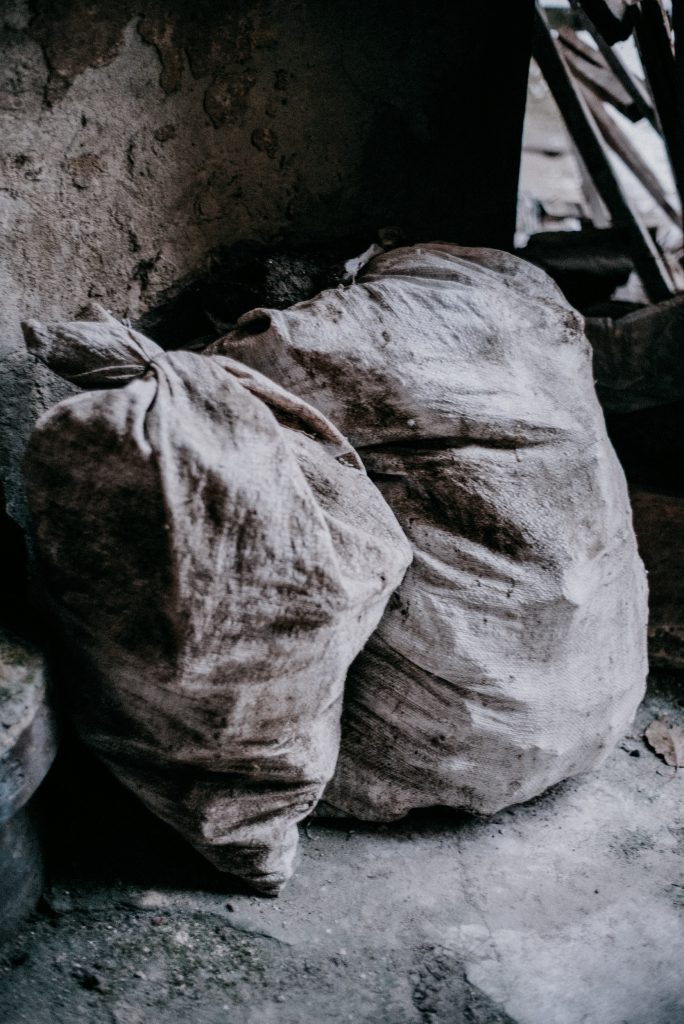
I think it was in 1942 when, all of a sudden, in walks in a German soldier with a big sack. I was just astounded; I thought, ‘Oh, this is the end; they’re going to take me away.’ And my mother said, “Don’t worry, just get into the sack, it’s okay.” And then she said, “Goodbye. Keep quiet, don’t say a word.”
At that time I was so traumatised that when anyone told me to do something, especially my mother, I did it without question. So he slung me over his shoulder and we went down to a truck. There was a whole bunch of sacks and my brother was already in the truck. My parents must have told him what was going to happen but they were afraid that I might say something because I was so young, so they told me nothing.
We drove out of the ghetto and into the Gentile section of Lviv. We were let out and I was terrified because I knew I wasn’t supposed to be there. We went to these Catholic people who hid us. I really don’t remember arriving, but for the next two years we were hidden in a room at the front of the house. It was a middle-class neighbourhood, very nice, near a park, I think it was on the third floor. There was a little balcony outside our room and there were double doors that led to another room. In the other room there was a grown-up brother and sister who were hidden – they had false papers – and there was another door that led to the bathroom.
Through the bathroom you could walk into the kitchen and there was a back staircase. From the siblings’ room, you walked into a foyer, a front door and there was another bedroom in which a couple slept and lived.
Our room had a bed and a round table covered with a long tablecloth. There was a screen and behind the screen we discovered one of the steamer trunks that our parents had brought from Kraków. And there was a huge pile of feather bedding, a sack of oat flakes and other things. Apart from that, there was a wardrobe and a couple of chairs and that was about it.
My brother and I were very malnourished by the end of the war, like sticks, with big bellies. We made a little hole in the sack of oatmeal and once in a while when we were really hungry we would take a couple of flakes. We’d chew them like chewing gum to make them last a long time; we were afraid that if we took too much we’d be found out and would get into trouble.
Basically we survived on bread. It wasn’t great because there was very little flour so they would put wood shavings and all sorts of rubbish in it but we thought it was wonderful. And then we’d have a bowl of soup without meat, so it was just soup. And there was semolina, which was horrible. We had very little to eat. Under the Nazis, the Gentile rations were a thousand calories a day. But for the Jews it was 500 calories a day. Nobody can survive on 500 calories so there was a huge black market and people found ways to get stuff.
One of the scariest moments for me was when our landlady came running and told us we had to go downstairs. Arthur said, “No, I think it’s better if we just stay here.” She replied, “Okay, you know what you want,” and he told me to go and lie in the bed, right by the wall. He took all the feather bedding from behind the screen, piled it on top of me and crept in himself. He had cleared away anything that suggested there might be children or anyone else in the bed and we just lay there.
We heard the door from the next room open and we could hear Germans and the sound of boots on the floor. And I thought, ‘I’m dead, this is it.’ Miraculously they didn’t look under the bed.
My father started to hear that the ghetto was going to be liquidated, and that the Germans were planning to kill all the Jews. He found a temporary place, a chicken coop, where they hid. A couple of days later he found a woman who would hide them for a lot of money.
She built a false wall with a little cut-out through which they could go in and out of the back of a chest of drawers – that’s where she put their food. But the woman was an alcoholic and I was told by our landlady that she went to a bar and must have said something that made somebody suspicious. The Germans paid bounties, and this person went to the Gestapo and told them that they thought the woman might be hiding somebody.
I was told that they were all shot. Recently, after Arthur read my memoir, he said, “You know, I was told a different story. I was told that they were sealed the apartment and that they died there.” That was so nightmarish that I just couldn’t deal with it. I prefer to think that, however bad shooting is…
A Committee Member got in touch with Arthur at school and asked him if he wanted to go back to Kraków. He said to Arthur, “Every day, when you go to school, put a couple of pieces of clothing in your satchel and bring them to my apartment. There’s a group of children that are going to be leaving for Kraków in a few days. We’ll try and get you on that train because there are very, very few trains. If we miss this one, who knows when there will be another?”
We did as we were told. We were told we had to go to his apartment, to basically run away. For some reason, our landlord asked Arthur, “What do you have in your satchel? Open your satchel!” He found the clothing and said, “You little liars. How can you do this to us? Go to your room, you are going nowhere!” Of course, we were terrified so we went back to our room. When Arthur heard the door close he told me to go to the balcony and brush my hair.
In the steamer trunk, we had found my mother’s silver hairbrush. “Drop the brush onto the street,” he said. “Then go out and if the lady meets you at the front door, tell her that you have to pick up our mother’s brush.”
I was terrified but I did as I was told because that’s what I did. And she did come out and she said, “Where do you think you’re going? Did you hear what my husband said? Go back to your room.” I was crying and told her, “I have to pick up my mother’s brush,” so she let me go. I picked up the brush and I ran. We’d had no exercise whatsoever, so running was very hard for me. I got such a stitch and was so out of breath, but I managed to get to this [safe] apartment and I was just weeping because I thought ‘That’s it, I’ve lost my brother. They will keep him and I’ll be all by myself. What am I going to do?’
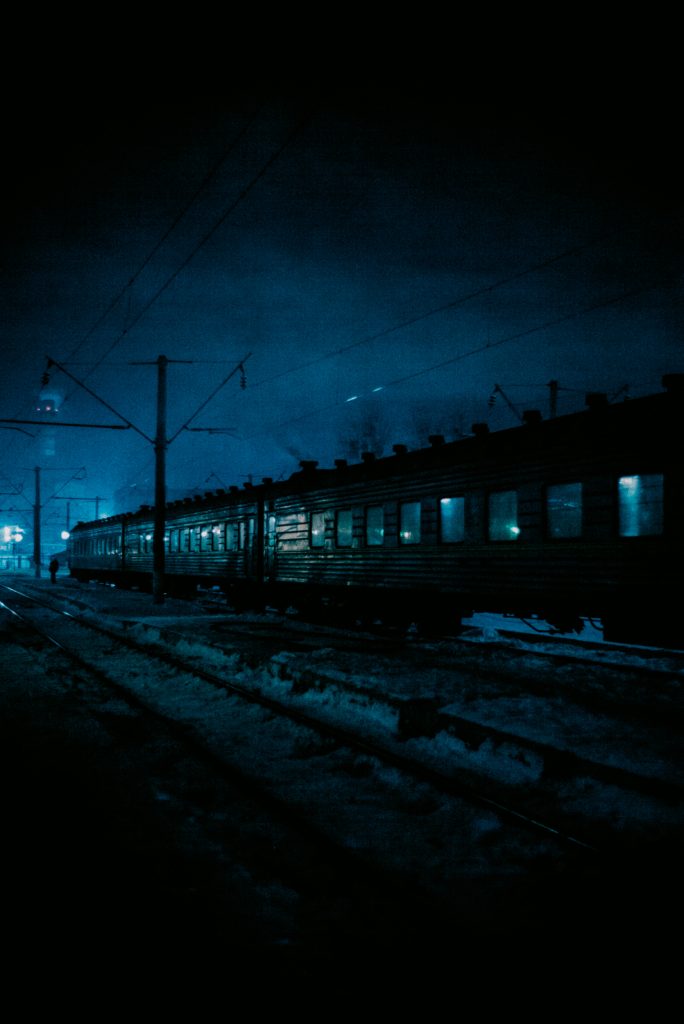
But Arthur got passed her very easily and he arrived a few minutes after I did. Then we had to go from one safe house to another because they were afraid to keep us in that apartment in case the couple would think we had been kidnapped and would call the police. So we moved a few times and then finally the day came: the train came. There were several children and we were in cattle cars.
We came to a station and were told us to get off the train and cross the tracks because there was another train that was going to Kraków. In order to reach the other track we had to go under the train. ‘Well,’ I thought, ‘This is the end.’ I was sure that the train would move the minute I went under it. I was terrified but somebody said, “You’re getting under the train or you’re staying here. We are all going.”
Somehow I got myself onto the tracks and onto the other train, which again was full of people. It was a disgusting, filthy train.
We stopped again at some place where we were taken off the train and stayed in somebody’s house. In the middle of the night there was shooting and screaming. I woke up and I thought, ‘Oh my God, the war has started again.’ Then I realised that they were singing the Polish national anthem and somebody told me that the war was over. It was VE day and then, the next morning, we got on another train and we reached Kraków.
After they reached Kraków, Anna and Arthur went to live with Yaja, the niece of their cousin. When Yaja’s father returned from a concentration camp, Arthur moved into an orphanage as there was not enough room in the apartment for everyone.
When Yaja’s father came back, I was shocked because he was basically a skeleton. We had one bed in that room and when he was in the bed, either I or Yaja would get in to try and keep him warm. We didn’t have that many blankets and he was always cold. He was so weak; we had to feed him because he couldn’t hold a spoon.
At first I was really scared of him, but he was such a wonderful man. He told me stories and I grew to really love him. And I remember he asked me what was my favourite fairytale. I told him it was Hansel and Gretel and he said, “Well, we’re really lucky, you know, because in the concentration camps, they were ovens also, but they didn’t fatten us up to put in the oven. They starved us and when we were starved, they put us in the ovens.”
That was the first time I’d heard about the ovens and it was the first and last time that anybody said anything to me about the concentration camps.