Daphne de Jong. Bath, 2020 (Scroll down)
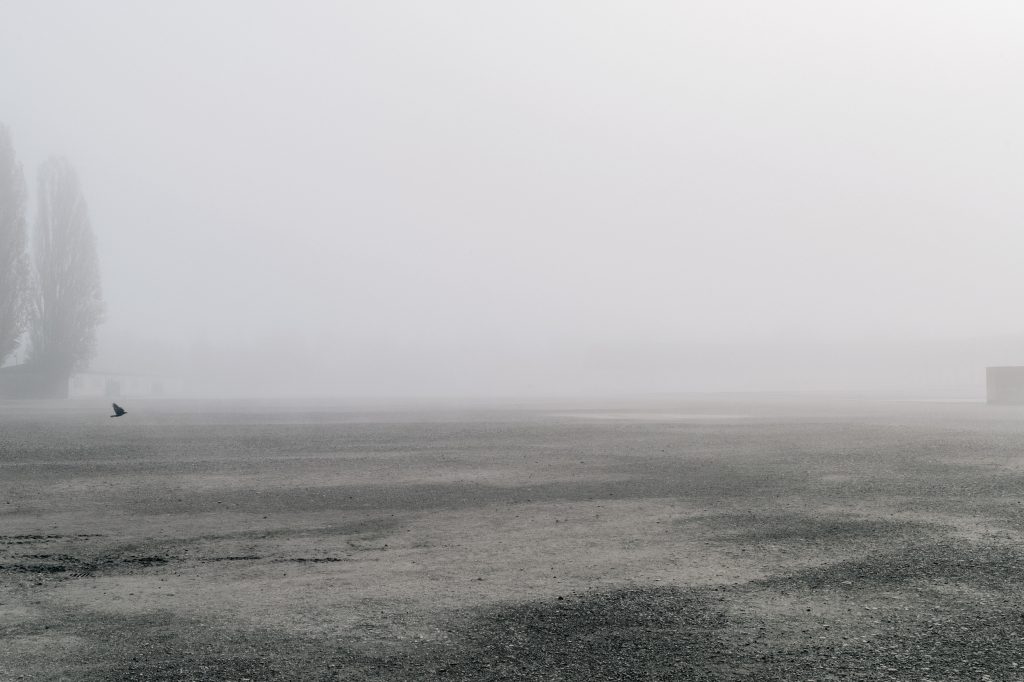
Roll call area and barracks at concentration camp where over 41,000 people were murdered. Dachau, Germany. 2016
Barracks at concentration camp where over 41,000 people were murdered. Dachau, Germany. 2016
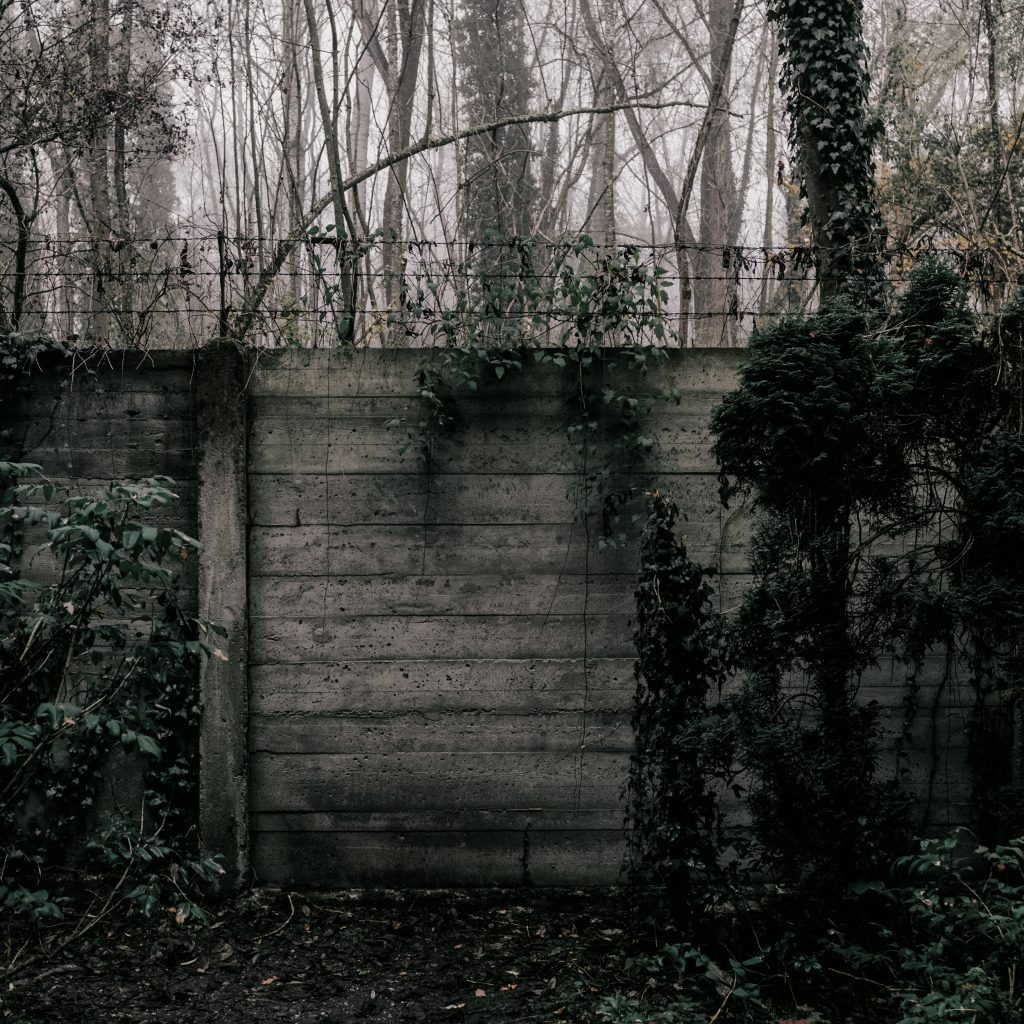
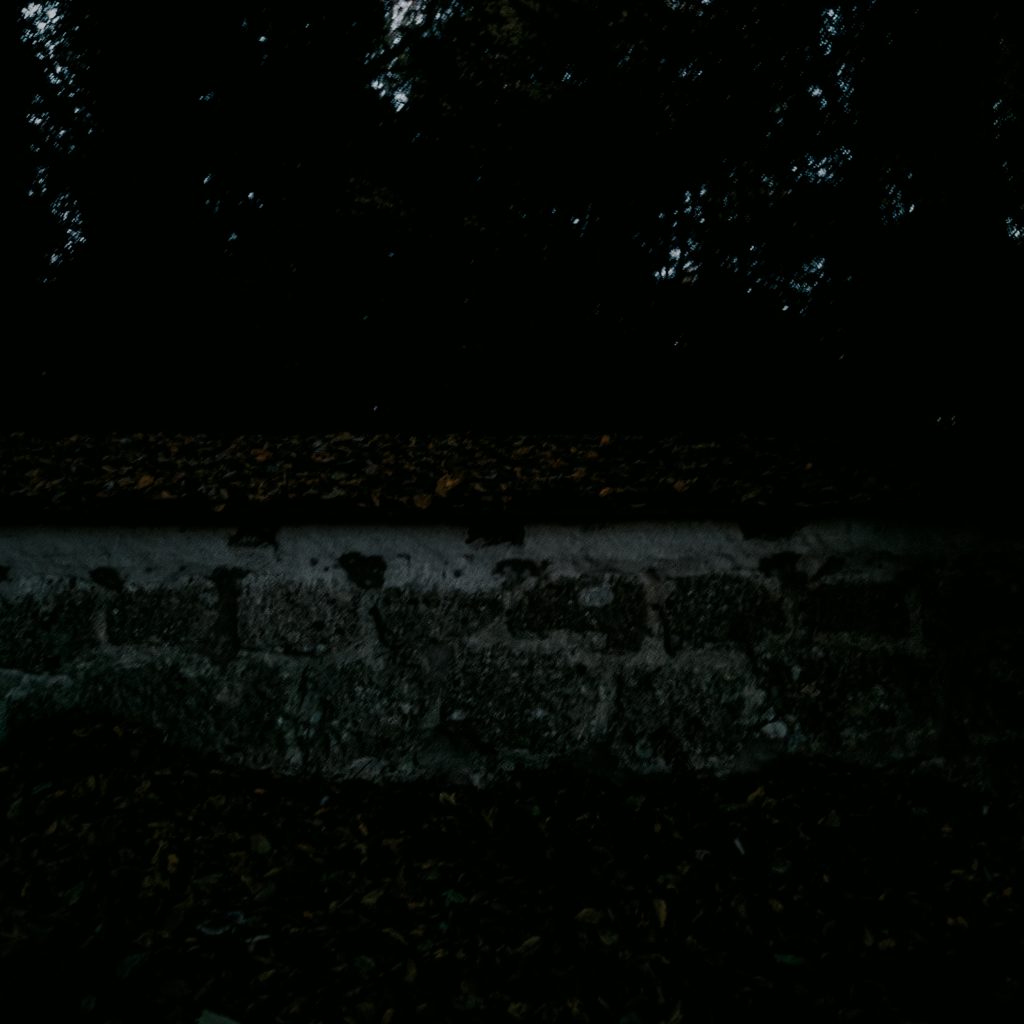
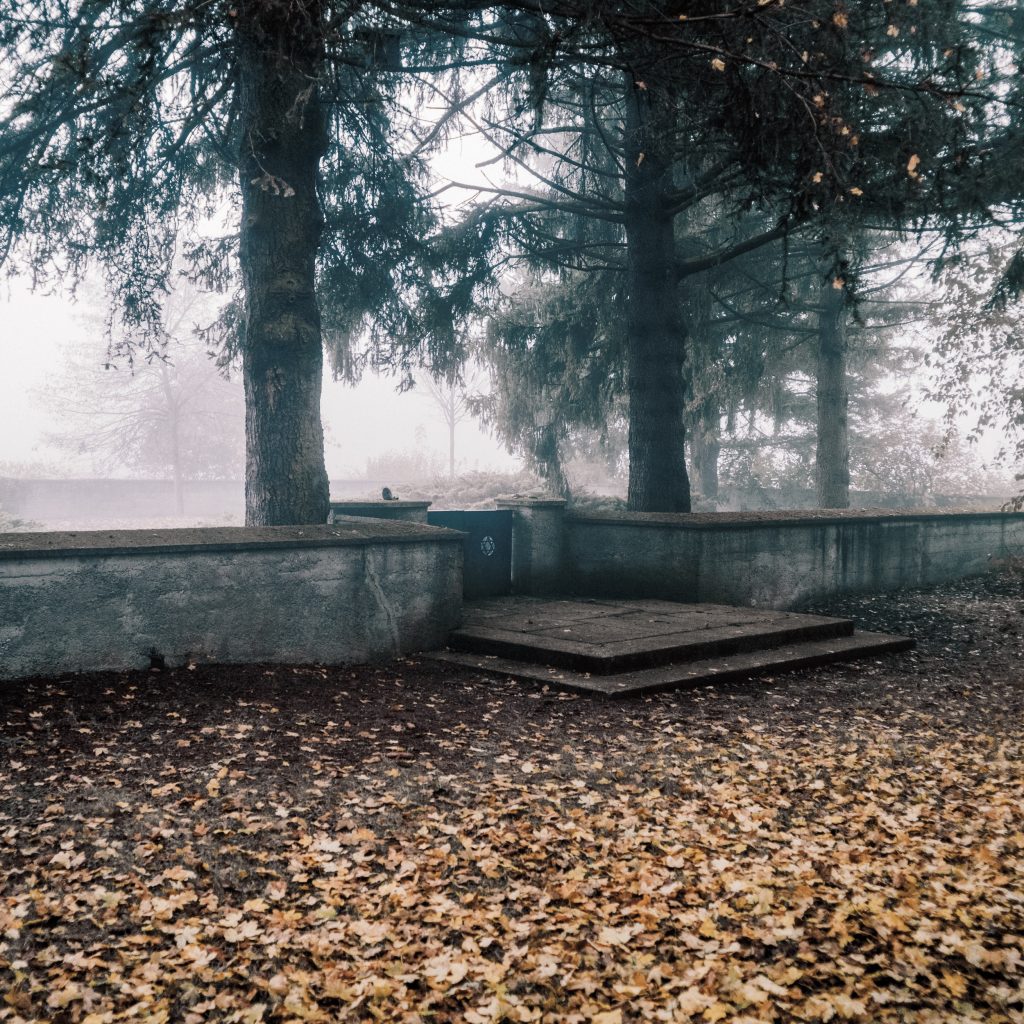
Wall surrounding grounds of former concentration camp. Behind this area was a wild game park used by camp guards. Dachau, Germany. 2016
Kaufering IV concentration camp, sub camp of Dachau, Erpfingen near Landsberg, Germany. October 2016. Known as ‘Sterbelager’ (death camp). Also used as a 'sick camp', hundreds of bodies were found piled up here upon liberation by 7th United States Army.
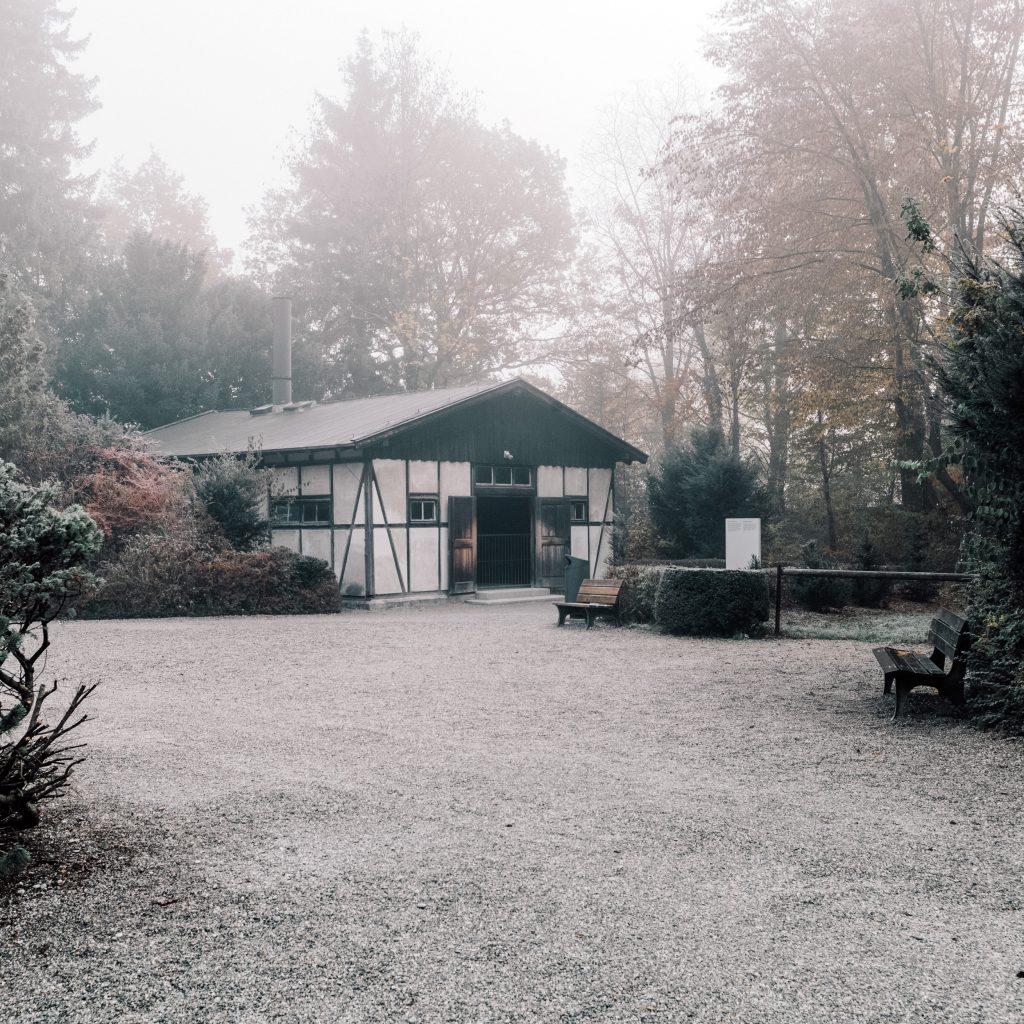
Old crematorium at concentration camp. Upon liberation countless corpses were found piled up. Dachau, Germany. 2016
Execution site at Pistol Range. Dachau, Germany. 2016
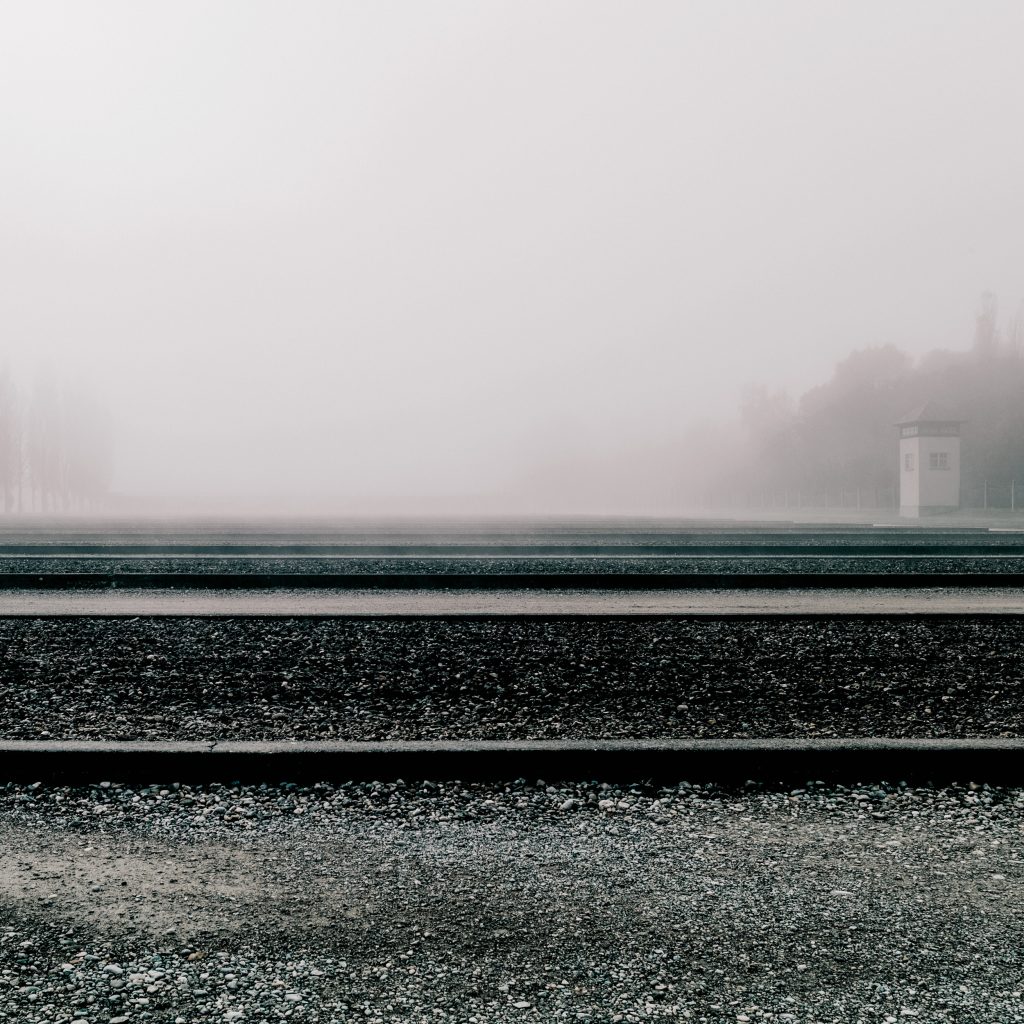
Area of Commandant's headquarters and road and rail track that brought over 41,000 prisoners into concentration camp. Dachau, Germany. 2016
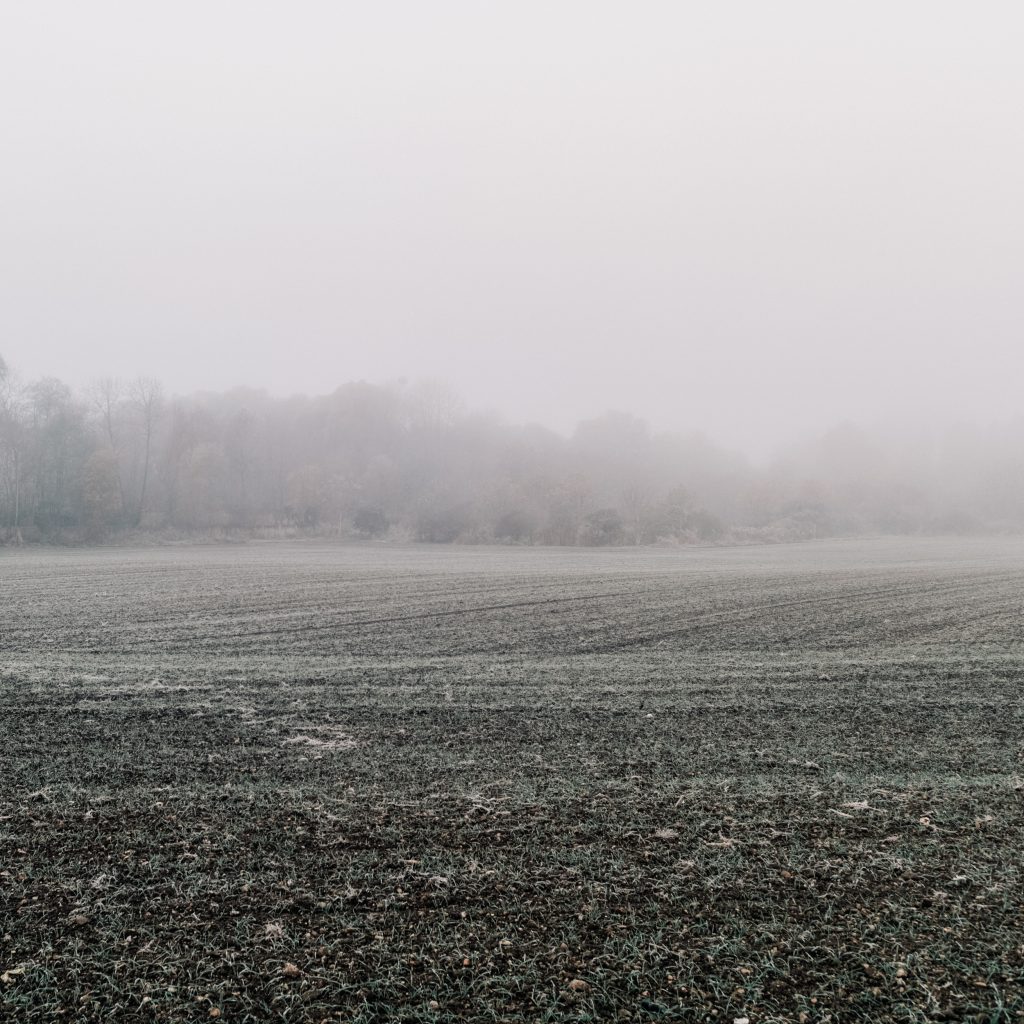
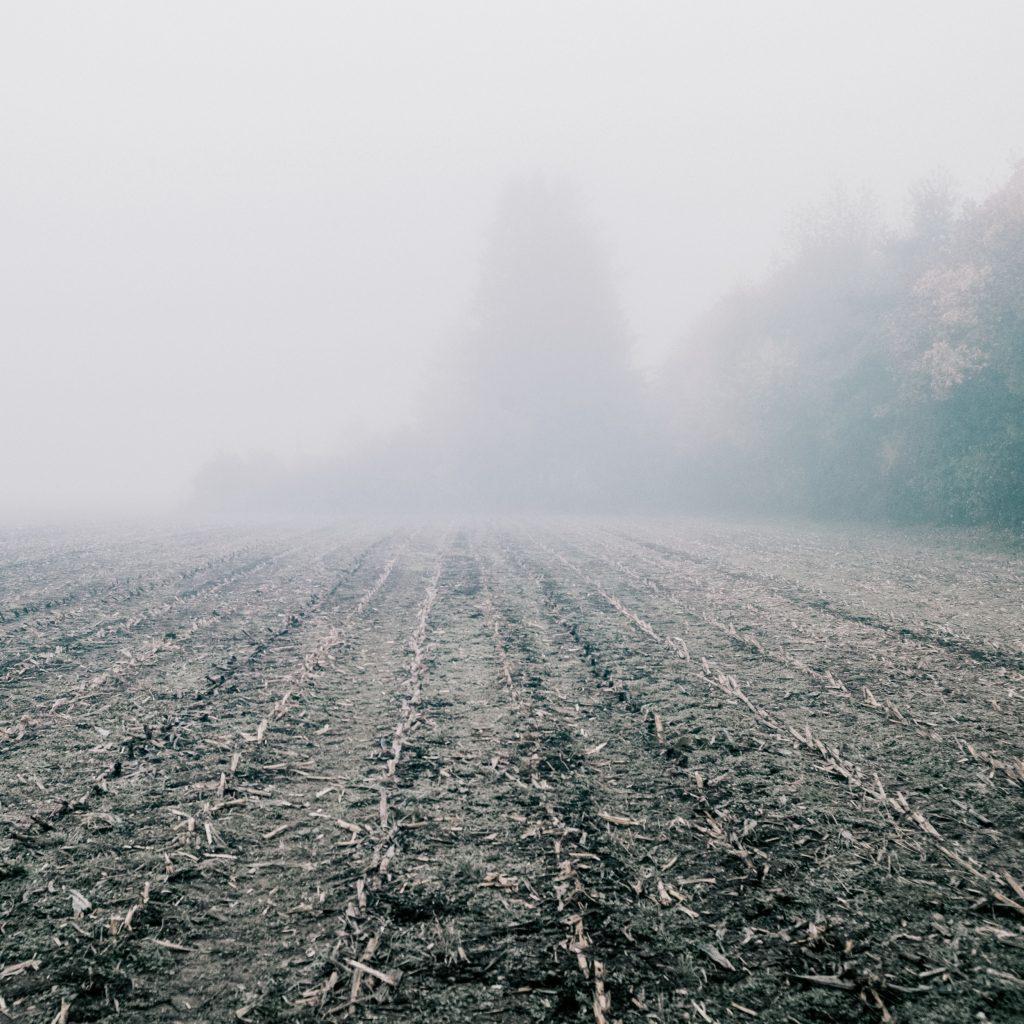
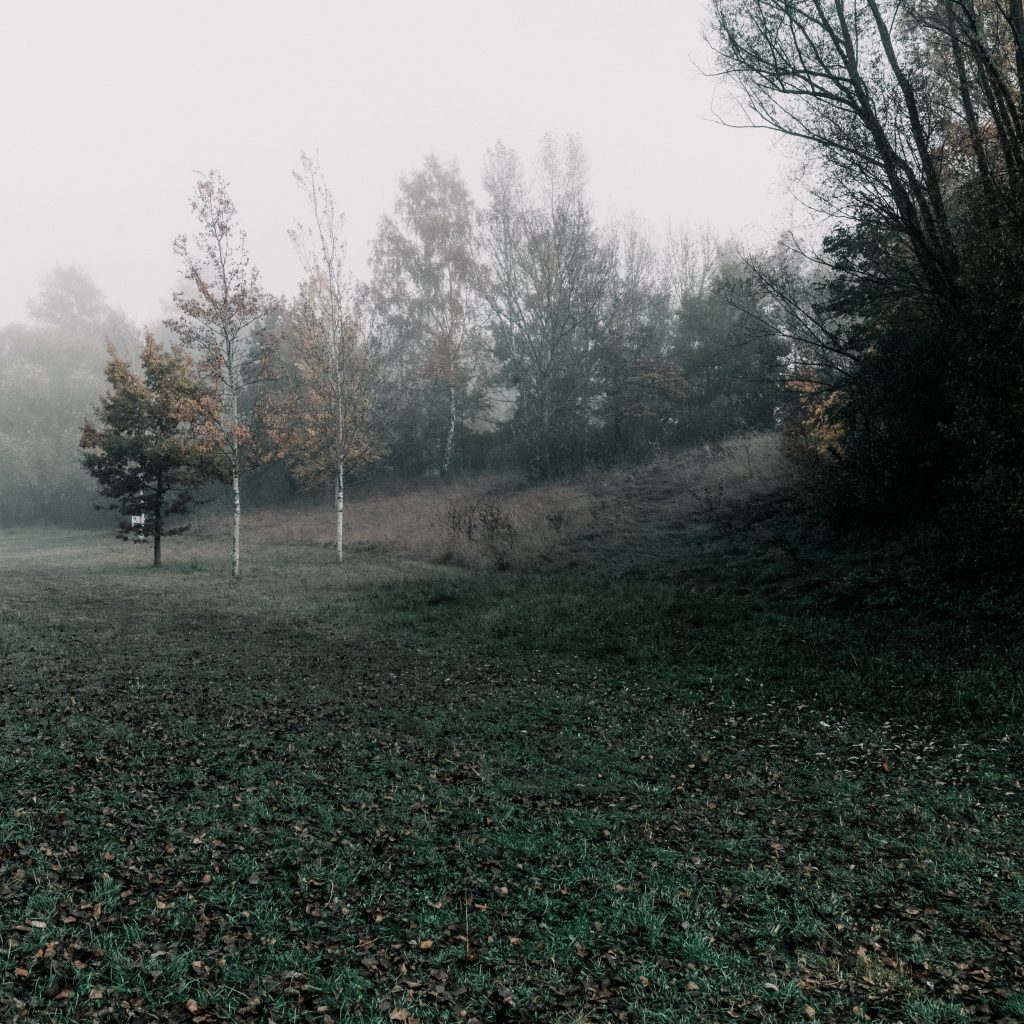
Mass grave. A hill north of Dachau, in the town of Etzenhausen., Germany. October 2016. Used by the SS as a mass gravesite when they ran out of coal to burn the bodies in Dachau concentration camp in early 1945.
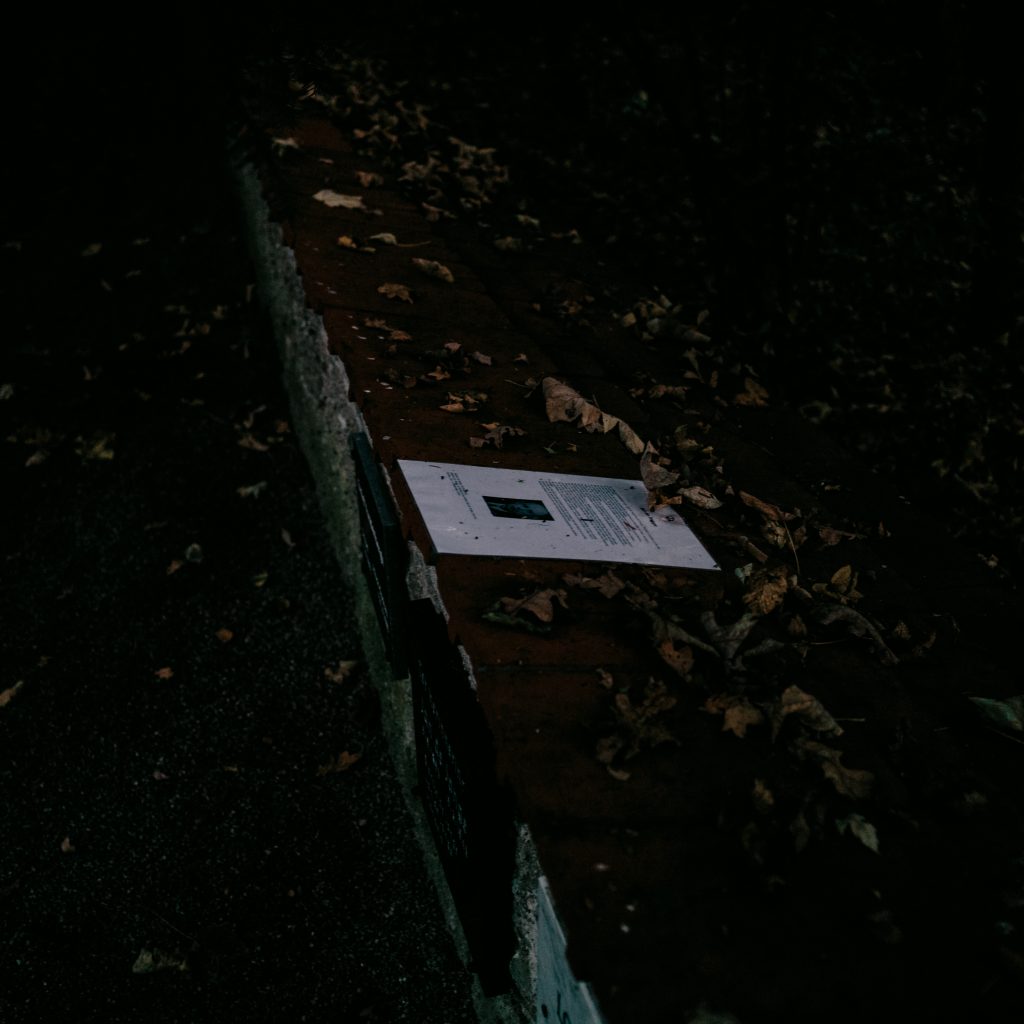
Opa. Leitenberg, site of mass grave, Dachau, Germany. October 2016.
Mass grave. A hill north of Dachau, in the town of Etzenhausen., Germany. October 2016. Used by the SS as a mass gravesite when they ran out of coal to burn the bodies in Dachau concentration camp in early 1945.
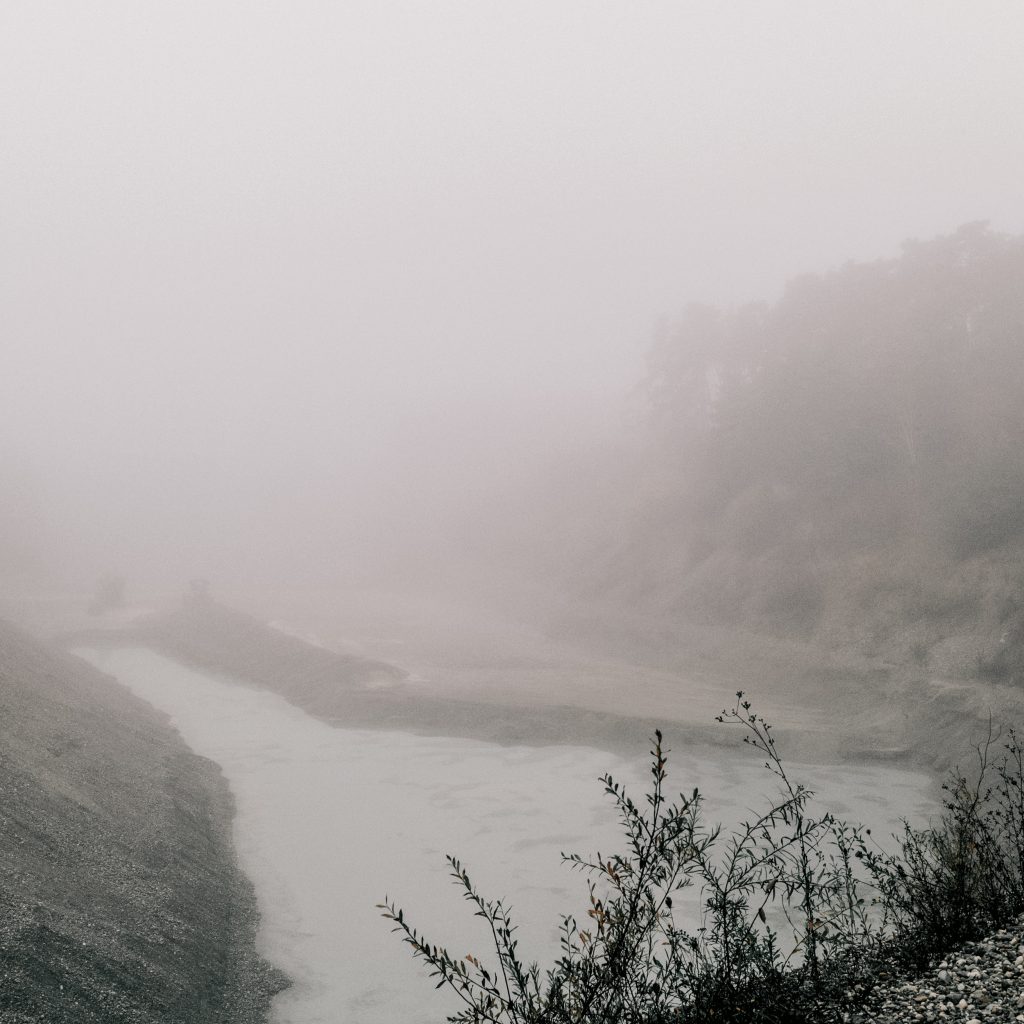
Gravel pit where prisoners worked. Kaufering IV sub camp. Landsberg, Germany. 2016
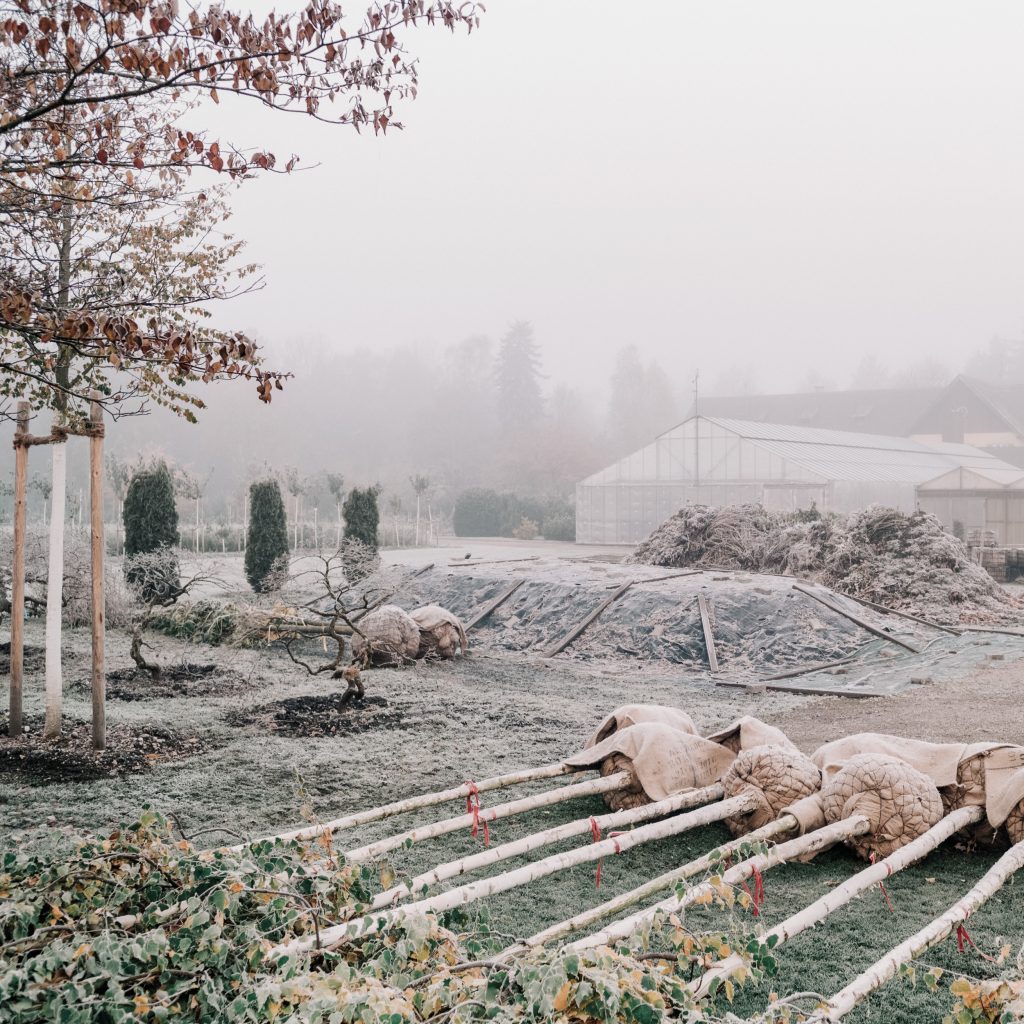
'Herb garden' and former slave labour plantation, sub camp of Dachau concentration camp, Germany. 2016
Mass grave and memorial. Kaufering IV concentration camp, sub camp of Dachau, Erpfingen near Landsberg, Germany. October 2016. Known as ‘Sterbelager’ (death camp). Also used as a 'sick camp', hundreds of bodies were found piled up here upon liberation by 7th United States Army.
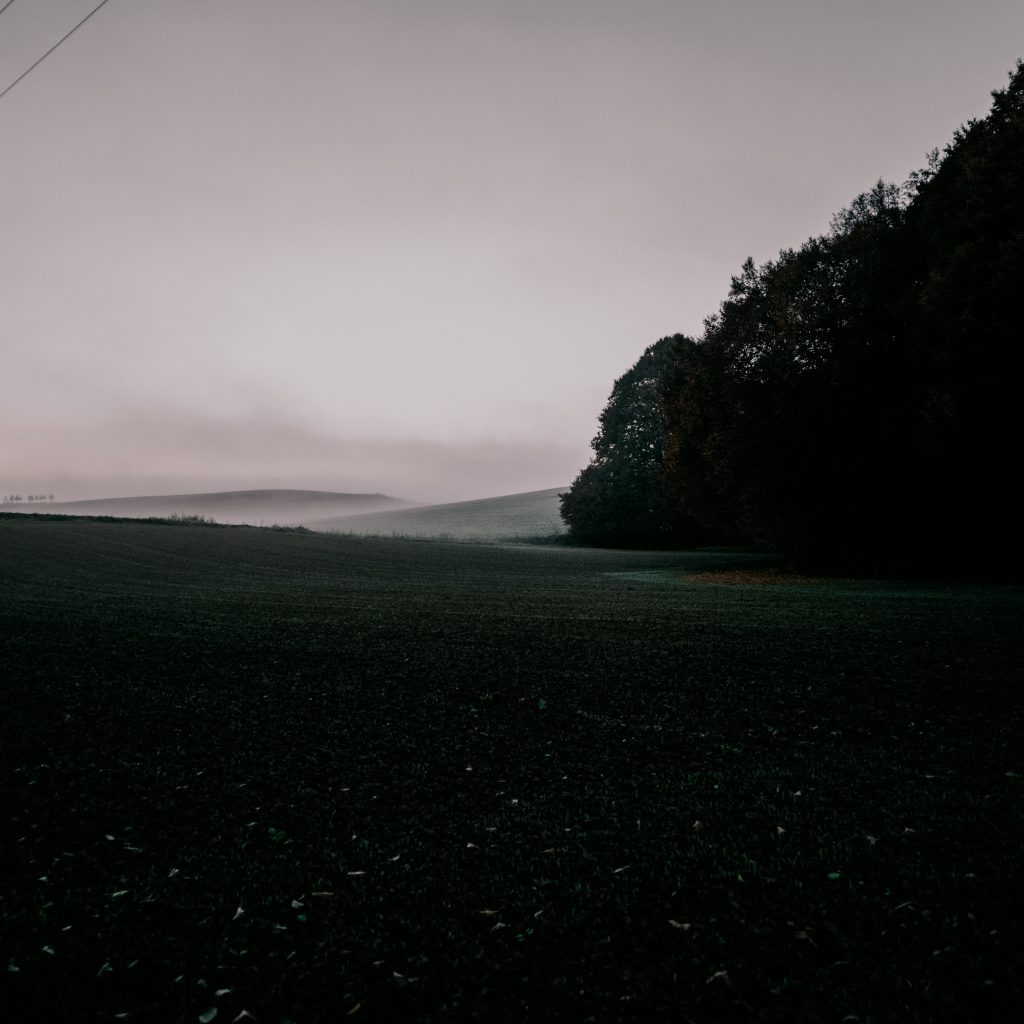
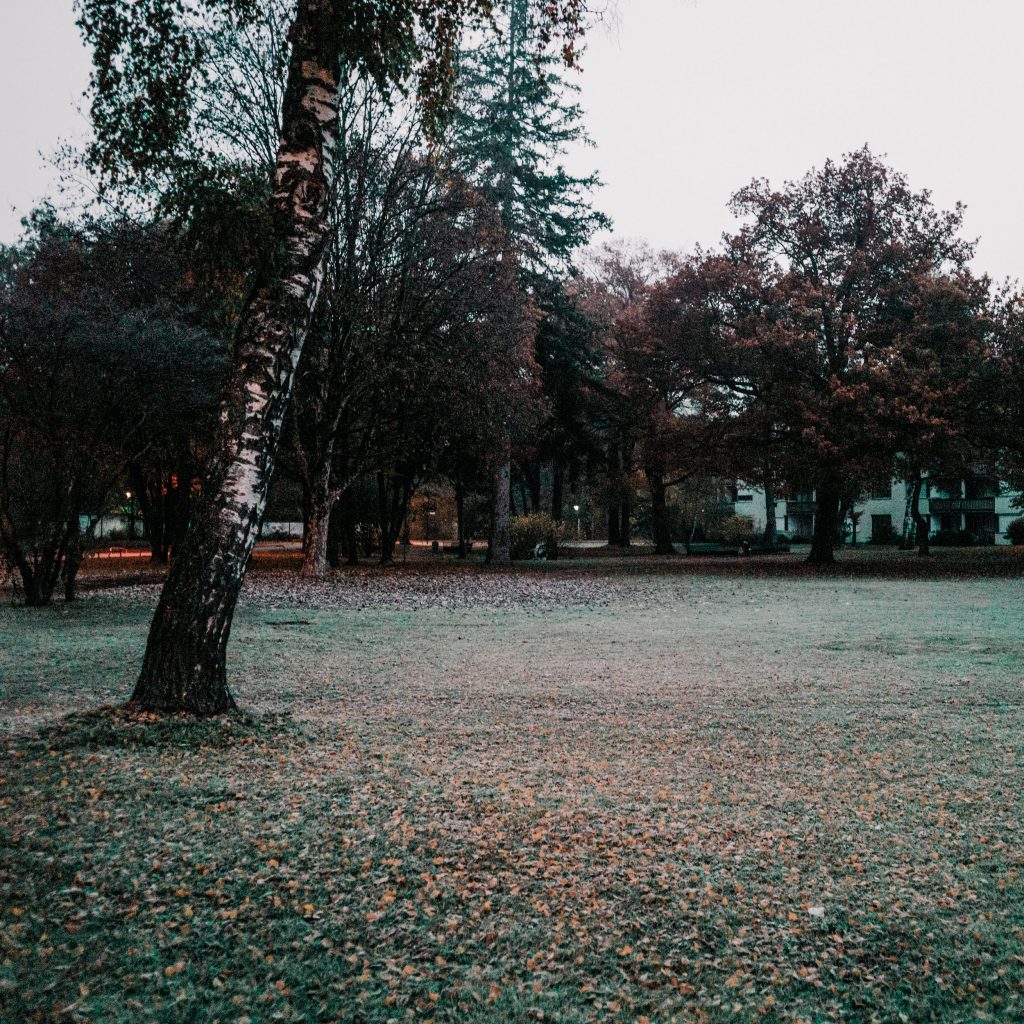
Route of 'death march' for 7,000 prisoners from concentration camp, 3 days before liberation. Dachau, Germany. 2016
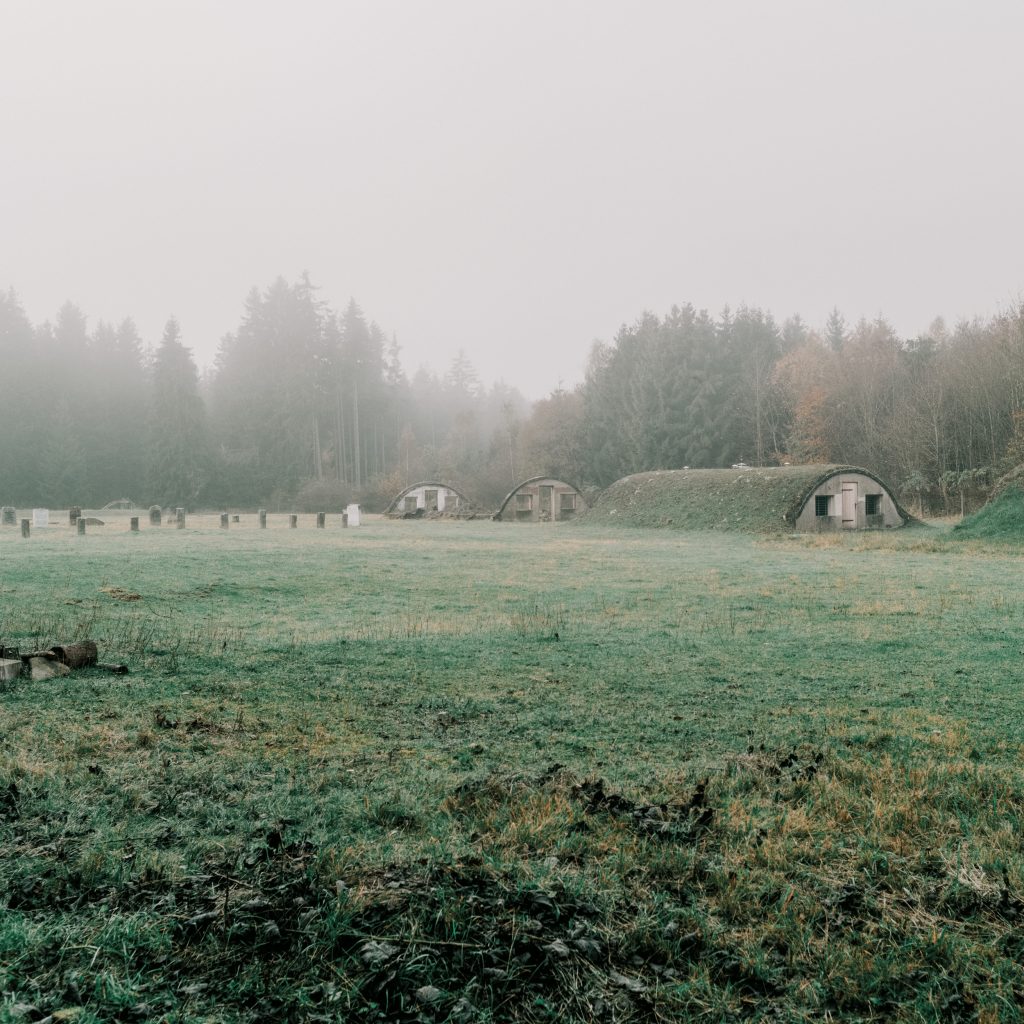
55 huts and 6 clay tube buildings. Kaufering VII concentration camp, sub camp of Dachau, Germany. October 2016.
Kaufering VII concentration camp, sub camp of Dachau, Germany. October 2016.
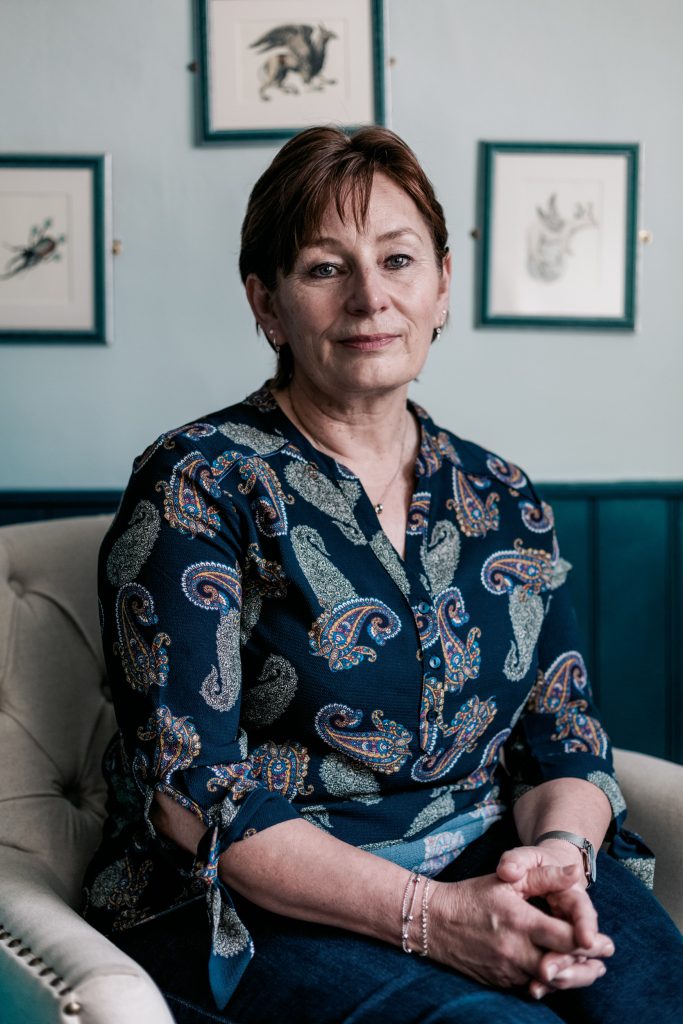
Daphne de Jonge, granddaughter of Jan de Jonge (1895-1945). Bath, United Kingdom, 3 January 2020.

Jan de Jonge

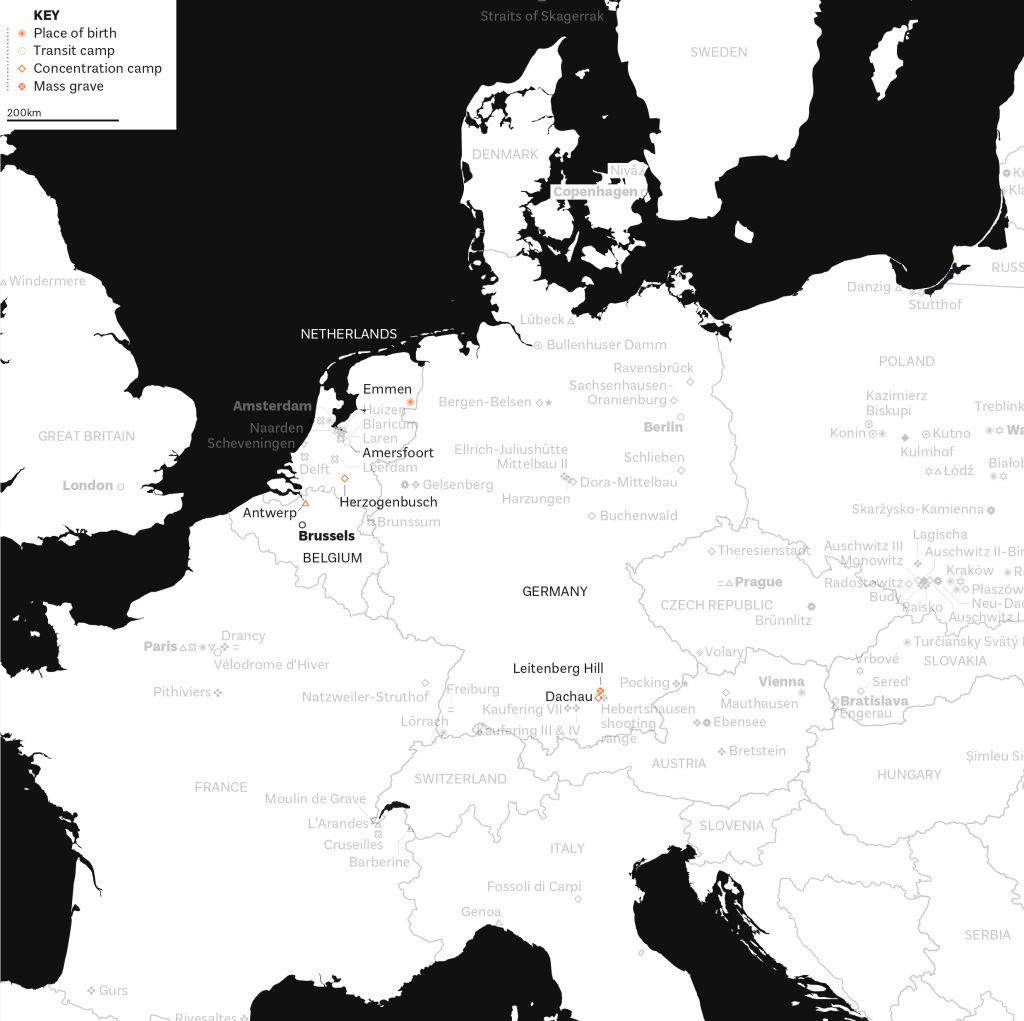
‘My Opa, my grandfather, was born on 9 September 1895 in Emmen in Holland.

On 25 June 1941, he was taken from his home and family by two police officers from Hengelo, by order of the German Sicherheitsdienst [the Nazi security service]. He was detained because he had a little metal box with name tags in it, which had not been destroyed. Tags bearing not only Opa’s name, but the names of other Hengelo citizens. My Opa was part of the resistance in his hometown of Hengelo. With Opa’s blood running through my veins, I am a lot like him: doing nothing is not an option.

After being detained in the Schoorl, Amersfoort and Vught camps, my Opa was taken to Dachau. This terrible train journey was his last ever.

On his arrival in Dachau on 26 May 1944, Opa received a number: 69278.

My Opa isn’t a number: he is a husband, a father, a brother, a brother-in-law, a cousin, a neighbour, a friend, a child to somebody. He is not a number.

Like many others, Opa had to work in the BMW factory. This factory was attached to a Dachau outdoor labour sub camp known as Dachau-Allach. Due to the camp’s terrible living conditions, many prisoners became very ill with typhus fever. My Opa was one of them.

He was sent back to Dachau on 2 February 1945, because he was arbeitsunfähig [signed off as sick]. Opa died on 7 March 1945.

On 29 April 1945, Dachau was liberated by American soldiers – bless them for that.

29 April… so close, yet too far for my Opa. He was buried on the Leitenberg, Dachau’s mass grave. He is buried there with about 7,400 other human beings.

I am happy and relieved that Opa’s body left that horrible camp. Eventually Opa was free.

I have a strong feeling that Opa died thinking, ‘Do my wife and children know where I am?’

By placing a plaque, we answered that question.

Yes, Opa, we know where you are.

A grave should never be anonymous.’

— Told by Daphne de Jonge, granddaughter of Jan de Jonge (1895–1945). Bath, United Kingdom, 3 January 2020.